Games news: chess and education in Germany
Posted on: September 11, 2009
 Germany,
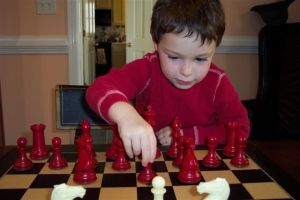
This summer instead of going on holidays, a group of researchers from the University of Trier in Rhineland-Palatinate, studied the experimental introduction of chess in elementary school for the new academic year.
The results show that 6 years old children that have begun to learn how to playchess learn more easly not only math but also German grammar.
In other words researchers proved that children who play chess are doing better during all the years of the primary school.
For this reason chess are now considered as an established educational method in Germany’s primary schools.
Chess help children develop logic and represents a great workout for their brain; chess can also useful to facilitate the integration of foreign scholars (more than eight million students in Germany are immigrants or children of immigrants).
This new method of using chess to improve students’ performances in traditional disciplines like grammar and math is now used in all the primary schools of the Germany.
The biggest problems for the teachers was when children learned how to play chess and started to beat them. We must say that this a clear evidence of how the pupils can overcome their masters.
For this reason now teachers are assisted by regular chess players during the “chess hours”.
I don’t know if you live in Germany or not, the fact is that scientific evidences show that chess are a great educational game and can help children to develop not only math capabilities, but also grammar and literacy skills.
The video below shows World Chess Champion Susan Polgar playing chess vs. the young students of a German school.

14 Responses to "Games news: chess and education in Germany"


September 12, 2009 at 12:55 pm
Hi,
Glad to hear your point of view and I totally agree!
chess could be a great game to teach not only school subjects, but also life skills, just like you said.
for this reason, in my opinion, chess should be taught in the schools of all the world.
Bye.
CLEVER GAMES FOR CLEVER PEOPLE.


September 15, 2009 at 5:18 am
Beautiful, even more research. Its great their making this into educational policy.
Check out my blog at chesseduabroad.wordpress.com to read about my work with a chess organization that sets up programs for this very purpose in rural and developing communities in africa and Asia.
thanks!
September 15, 2009 at 9:58 am
Hi Paul,
I really like your blog and I think you’re doing an amazing work with your chess programs in Africa and Asia.
I wrote a comment on your latest post check it out.
Bye!
CLEVER GAMES FOR CLEVER PEOPLE.

September 15, 2009 at 8:54 pm
Great news!, but this is sort of “old” news..it was proven before – I’ve blogged about it about 2 years ago…researches (also from South AFrica) have found that chess helps with dyslexia, reading, maths etc. A female lady – Van Zyl – has done some research about it in the early 90’s too and she’s been quoted on the USA-chess-site too (with other researches’ results)
September 15, 2009 at 8:57 pm
I’ve had parents with children in the lower grades in Primary School whose children were diagnosed with ADHD. They’ve heard or read that chess is one solution to solving concentration problems[…]
September 15, 2009 at 9:31 pm
Hi Nikita;
Yes you’re right it was proven before that chess can help children and adults to solve different problems.
I could quote hundreds of studies in that sense…
But the real great “news” in my post is that nowadays, in German schools, children learn how to play chess.
I love the game of chess (just like you i guess) and I think this is a great educational policy.
Bye,
Clevgame
September 15, 2009 at 10:59 pm
hi Clevgame
yes, it’s great that it’s now in schools, I wish it could be taught in every school all over the world! 🙂

October 3, 2009 at 3:13 pm
Terrific article and posts!
It isn’t just chess, but all types of board games benefit education and the ability to concentrate and focus.
We host all these Games In Education Forum at the Chicago Toy and Game Fair. It is an accredited event by the State of IL.

November 2, 2009 at 8:44 pm
Thanks for the great posts, loving your blog! I was curious if you linked where you got the information from or the study they performed to figure it out anywhere?
November 3, 2009 at 1:15 pm
Hi Mat,
thanks for your comment, I’m really glad you like my blog.
I got this news Googling around, unfortunately I couldn’t get more info about this particular study. But You can check this pages realted to this post:
chess in school
chess and math in Germany.
chess in schools
Chess and school conference in Turin

November 10, 2009 at 11:13 pm
We’d be doing more with chess in the U.S., but we think we are too busy. Every classroom in the country should have at least one board in it. Win, win. Most teachers have NO vision. I had nine by the time I retired.
Field of dreams. Put sets out and they will come. And thee is very little sacrifice when you consider the benefits.
WASP

June 9, 2011 at 6:46 pm
What organization hold chess tournaments in Germany?
My son, James, age 7 plays in the USCF in North Carolina, USA. He’s actually pretty good was ove 1000, but he started playing adult tournaments and slipped to 984.
We are planing a trip to Germany next summer and we thought, if possible, he might have fun playing in a German tournament. Wanted to see if there were any schedules/websites where we could get information about German tournaments.

August 30, 2011 at 8:01 pm
I like the valuable info you supply to your articles. I will bookmark your blog and check once more right here frequently. I’m reasonably certain I will learn plenty of new stuff right right here! Best of luck for the following!



 Games for your mind
September 12, 2009 at 3:57 am
Hallo! Confirmed once more that chess can aid the mental and socialogical development of children. As a child taught the game within our family, it was instrumental in my development and early exposure to problem solving, mental visualization of ideas, planning and periods of time to execute strategies. The wise use of time in meeting time controls, of concentration, of seeing and understanding patterns of pawn structure and lines open for attack or needed defense contributes to a maturing of self values. Aside of all this thought is the realization of being with and sharing the joy of competition and learning that chess like many games tend to enrich life and friendships.